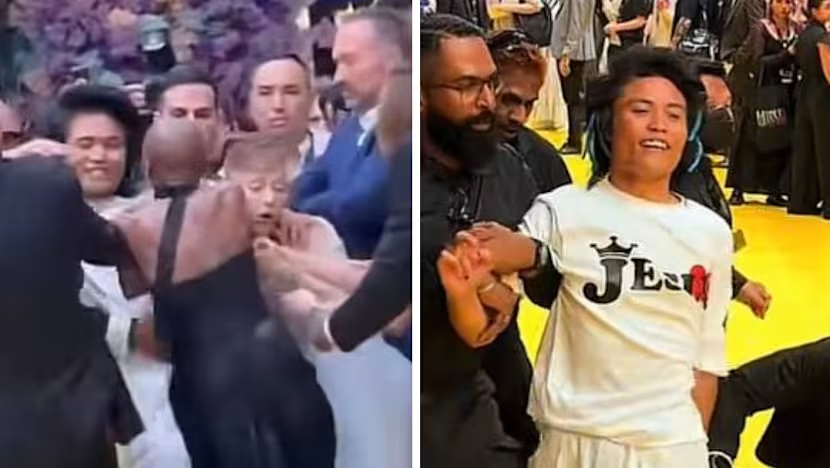
Wen’s actions on November 13 weren’t a harmless “moment of excitement.” He jumped barricades, physically grabbed Grande (leaving her visibly shocked), and attempted a second breach even as security escorted him out—all while documenting the incident for social media clout. District Judge Christopher Goh’s assessment that Wen was “attention-seeking” hits the mark: his choice to prioritize viral fame over the safety of Grande, fellow cast members (including Michelle Yeoh and Cynthia Erivo), and fans underscores a dangerous trend in modern fandom. This wasn’t devotion—it was disregard for personal space, event security, and public order.
What makes this case even more troubling is Wen’s history of disrupting high-profile events, from Katy Perry to The Weeknd concerts. His repeated violations suggest a pattern of entitlement: the belief that his desire for proximity to celebrities justifies breaking rules, and that “no consequences” would follow. Singapore’s swift response—nine days in jail, deportation, and a lifetime entry ban—destroys that myth. It sends a clear signal to serial offenders: jurisdictions worldwide are cracking down on celebrity harassment, and there will be tangible, life-altering penalties for those who cross the line.
Celebrity events are carefully orchestrated to balance fan access with safety. Barricades, security teams, and protocols exist not to “keep fans out,” but to protect everyone involved—including the stars themselves, who often welcome genuine interaction. Wen’s actions didn’t just ruin a moment for Grande; they disrupted an event that fans traveled from overseas to attend, and forced security to divert resources from ensuring a smooth experience to managing a crisis. His Instagram post claiming he was “free” after arrest only added insult to injury, framing his reckless behavior as a badge of honor rather than a violation.
In an era where social media incentivizes “clout chasing” and viral moments, the line between admiration and harassment is increasingly blurred. But Wen’s case proves that line is non-negotiable. Fandom should be about respect—for the artists, for fellow fans, and for the boundaries that keep everyone safe. When that respect is abandoned, consequences must follow. Singapore’s decisive action isn’t an overreaction; it’s a necessary defense of public order and celebrity safety.
For other fans tempted to prioritize their own desires over rules, Wen’s fate is a warning: adoration without restraint isn’t fandom—it’s a crime. And in a world that values safety as much as excitement, those who break the rules will find themselves on the wrong side of the law… and barred from the moments they so desperately want to be part of. Celebrity culture thrives on connection, but that connection can only exist when everyone agrees to play by the same basic rule: treat others as you’d want to be treated—even (and especially) when they’re famous.